Best Website Design Companies in 2026: Top 10 Agencies Compared



Choosing among the best website design companies is harder than it sounds — the market is crowded with agencies that promise premium results, but few deliver full-cycle service from discovery through post-launch support. A website directly shapes how prospects perceive your business: according to the Stanford Web Credibility Research, 75% of users judge a company's credibility based on its website alone.
In this ranking, we compare 10 agencies across 7 transparent criteria:
- Full-cycle capability
- Tech stack flexibility
- Delivery efficiency
- Service transparency and PM quality
- Industry specialization
- Client reviews and ratings
- Pricing accessibility
Below you will find a detailed methodology, a quick-comparison table, individual agency profiles with verified data, and a practical checklist for making your final decision.
What Does a Web Design Company Actually Do?
A web design company handles the planning, visual execution, and often the technical build of websites — from corporate pages to complex platforms with user accounts, payment systems, and third-party integrations.
Unlike a freelance designer who typically delivers static mockups, aprofessional agency covers a broader scope: research, information architecture,wireframing, visuals, responsive development, quality assurance, and ongoingsupport.
It helps to distinguish between web design and web development. The formerrefers to the visual layer — layout, typography, color, and user experience(UX/UI). Development covers the code that makes a site functional: backendlogic, databases, APIs, and performance optimization. Many agencies handle bothunder one roof; others specialize in the creative side and outsourcedevelopment, which can add cost, delay, and communication risk.
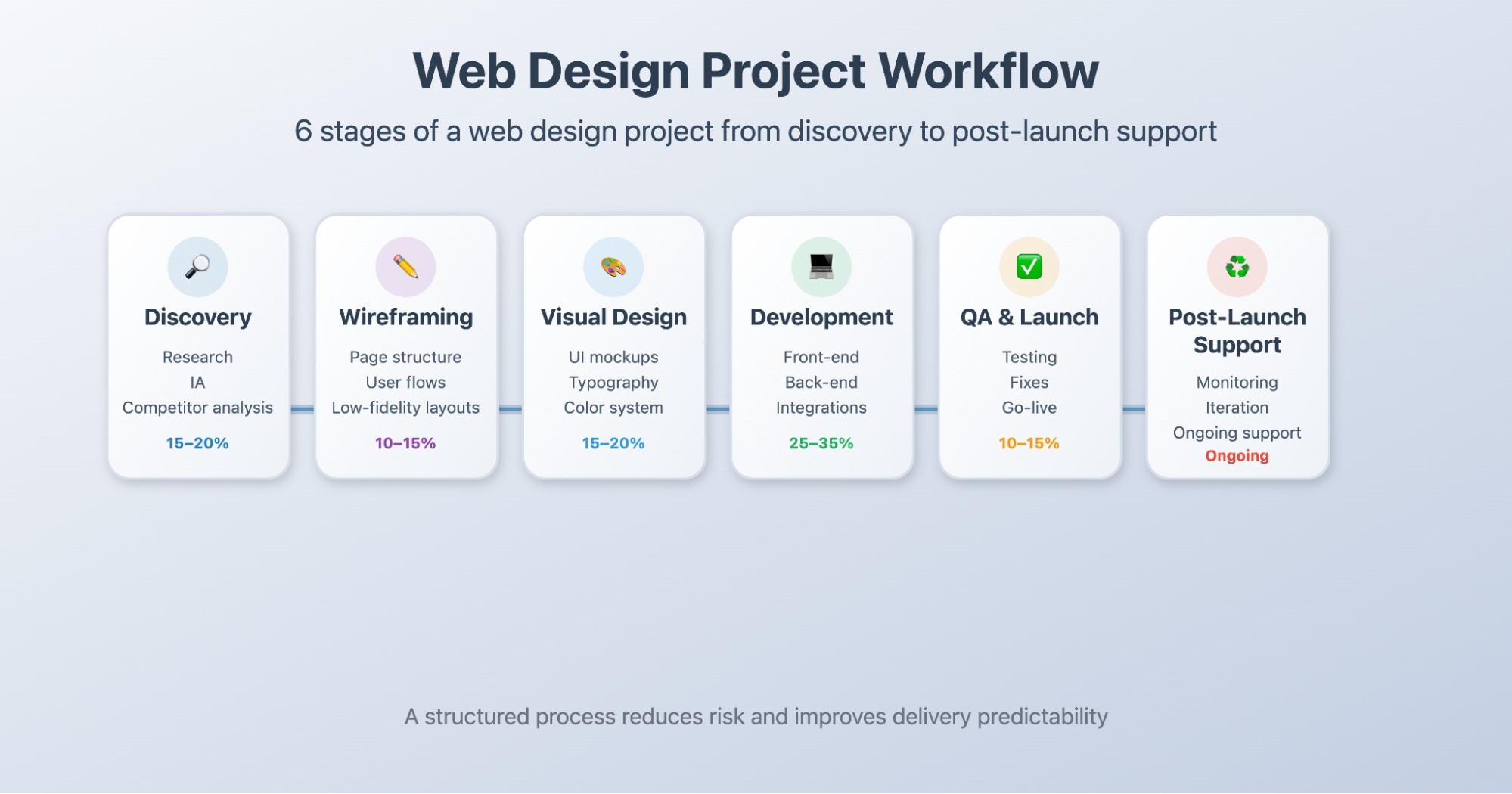
A typical project follows a structured workflow: discovery → wireframes →visual concepts → front-end and back-end development → QA testing → launch →post-launch support. Discovery alone — competitor analysis, user research,information architecture — often accounts for 15–20% of the total projecttimeline.
When should you hire an agency rather than build in-house or use a template?If your website needs to convert visitors into leads, integrate with businesssystems, meet compliance requirements (HIPAA, PCI-DSS, GDPR), or serve multipleuser roles, a professional agency brings the structured process andcross-functional team that a single freelancer or drag-and-drop builder cannotreliably provide. For example, agencies like Xmethod combine in-house UX/UI,development, and post-launch support — so you are not coordinating betweenthree separate vendors.
Budget is often one of the biggest factors when choosing a partner.Understanding typical project costs can help you evaluate proposals moreconfidently. For a deeper look at pricing benchmarks and cost drivers, see ourguide to software development costs.
How We Built This Ranking: 7 Criteria Explained
We evaluated 10 website design agencies using 7 criteria, applied equally to every participant. Each criterion was chosen because it directly affects a business outcome for the target audience: CTOs, product managers, and founders selecting a web design partner for projects ranging from €5K to €300K+.
- Full-cycle capability — Does the agency handle discovery, UX/UI, development, QA, and post-launch support in-house? A full-cycle partner eliminates multi-vendor coordination and reduces risk.
- Tech stack flexibility — How many platforms does the agency support (Webflow, WordPress, custom, headless CMS)? Clients should not be locked into one toolset.
- Delivery efficiency — What is the typical project timeline from kickoff to launch? Faster time-to-market means faster ROI.
- Service transparency and PM quality — Does the agency offer dedicated PM, regular reporting, time-tracking, and clear communication? For projects averaging €10–50K+, visibility into progress is critical.
- Industry specialization — Does the agency have dedicated experience in specific verticals (Healthcare, FinTech, SaaS)? Specialists understand compliance and conversion patterns that generalists miss.
- Client reviews and reputation — What are the Clutch or Goodfirms ratings and how many verified reviews does it have?
- Pricing accessibility — Does the agency publish pricing ranges or a clear model? Transparent pricing builds trust and lets businesses self-qualify.
Behind many of these criteria lies one fundamental principle: great UX andvisual execution is a business asset, not just an aesthetic choice. Strong UIand UX can improve conversion rates, increase customer trust, and reducefriction throughout the user journey. Learn more about the importance of UI and UX and why it has adirect impact on business performance.
Disclosure: Xmethod, the publisher of this article, is included as aparticipant. The same 7 criteria apply equally to every agency listed, andcompetitor data is sourced from public information — official websites, Clutchprofiles, and published case studies. We encourage independent verificationbefore making a decision.
Quick Comparison: The 10 Best Web Design Agencies at a Glance
The table below offers a snapshot of all the companies in this ranking. Scroll down for detailed profiles.
1. Xmethod — Best Full-Cycle Web Design Agency for Growing Businesses
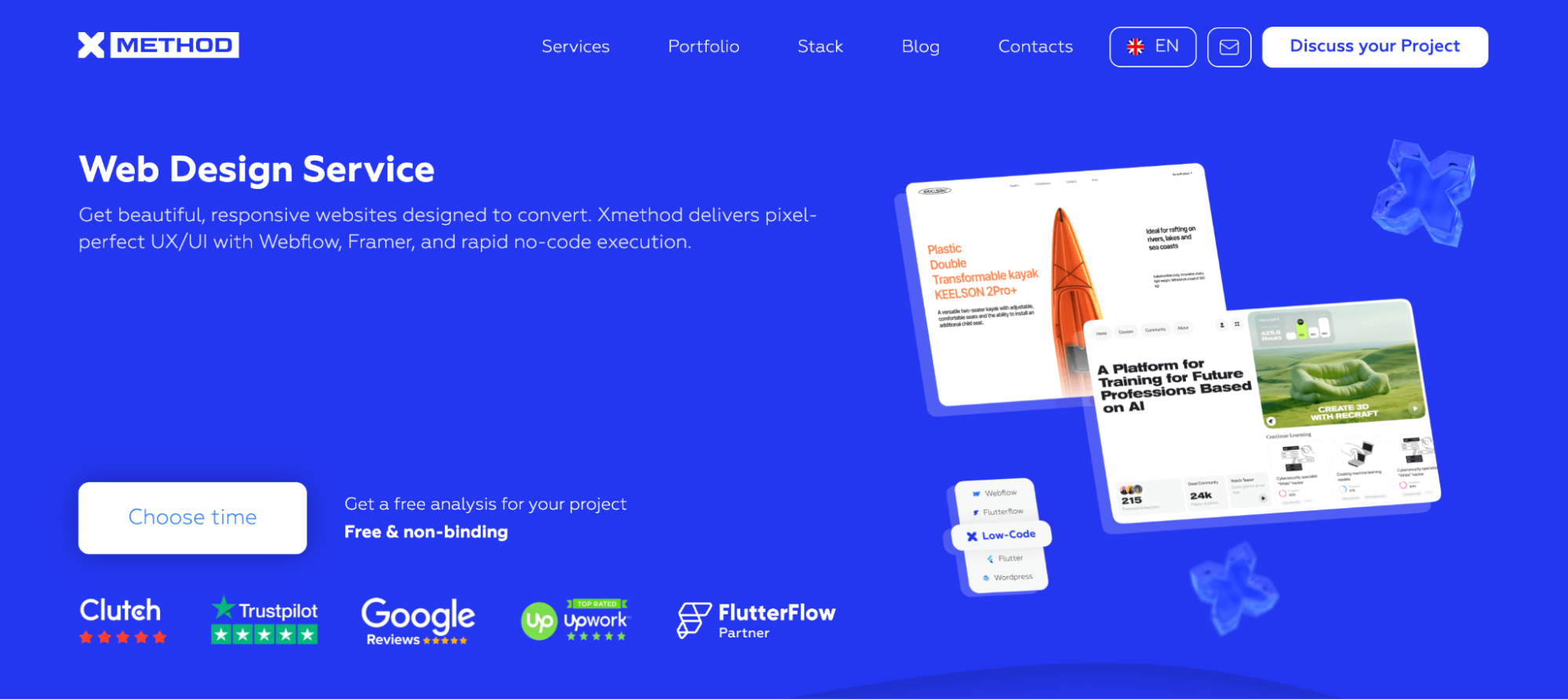
Xmethod is a Berlin-based digital agency built around full-cycle delivery: every project moves through structured product discovery (BPMN diagrams, user stories, database architecture), custom Figma design, development on the platform that fits the scope — Webflow, Bubble, or a custom React/Python stack — and post-launch support, all handled by an in-house team.
Who it fits: Growing businesses and established SMBs (5–300 employees) that need a single partner for website, mobile app, and ongoing technical support. Not a design-only studio — Xmethod covers the journey from concept to production.
Project management stands out. The agency assigns multiple PMs with backup coverage and an operational director overseeing delivery. Clients receive time-tracked reports, weekly status updates, and Loom video walkthroughs. Even during pre-sale, the team invests roughly 10 hours of research per lead — whether or not the deal closes. Clutch reviewers consistently highlight communication and PM quality as the strongest differentiator.
Tech flexibility separates it from single-platform agencies. Projects run on Webflow for marketing sites, Bubble for web apps, Flutter for cross-platform mobile, or custom code — chosen based on the project, not the agency's default tool.
Pricing is published via budget ranges (€5–10K through €100–300K), with the median mobile MVP project around €23K on a T&M billing model.
Strengths: Full-cycle capability, multi-platform flexibility, transparent pricing from €5K, dedicated PM, 9 industry verticals, 4.9 Clutch score.
Limitations: Founded in 2022 — shorter track record than enterprise agencies. Berlin-based, limiting in-person meetings for US clients. Team size not publicly disclosed.
Ranking position: Leads across all 7 criteria in combination; particularly strong in PM quality and tech stack flexibility.
Explore Xmethod's services or browse the portfolio.
2. Digital Silk — Best for Enterprise-Level Custom Web Design
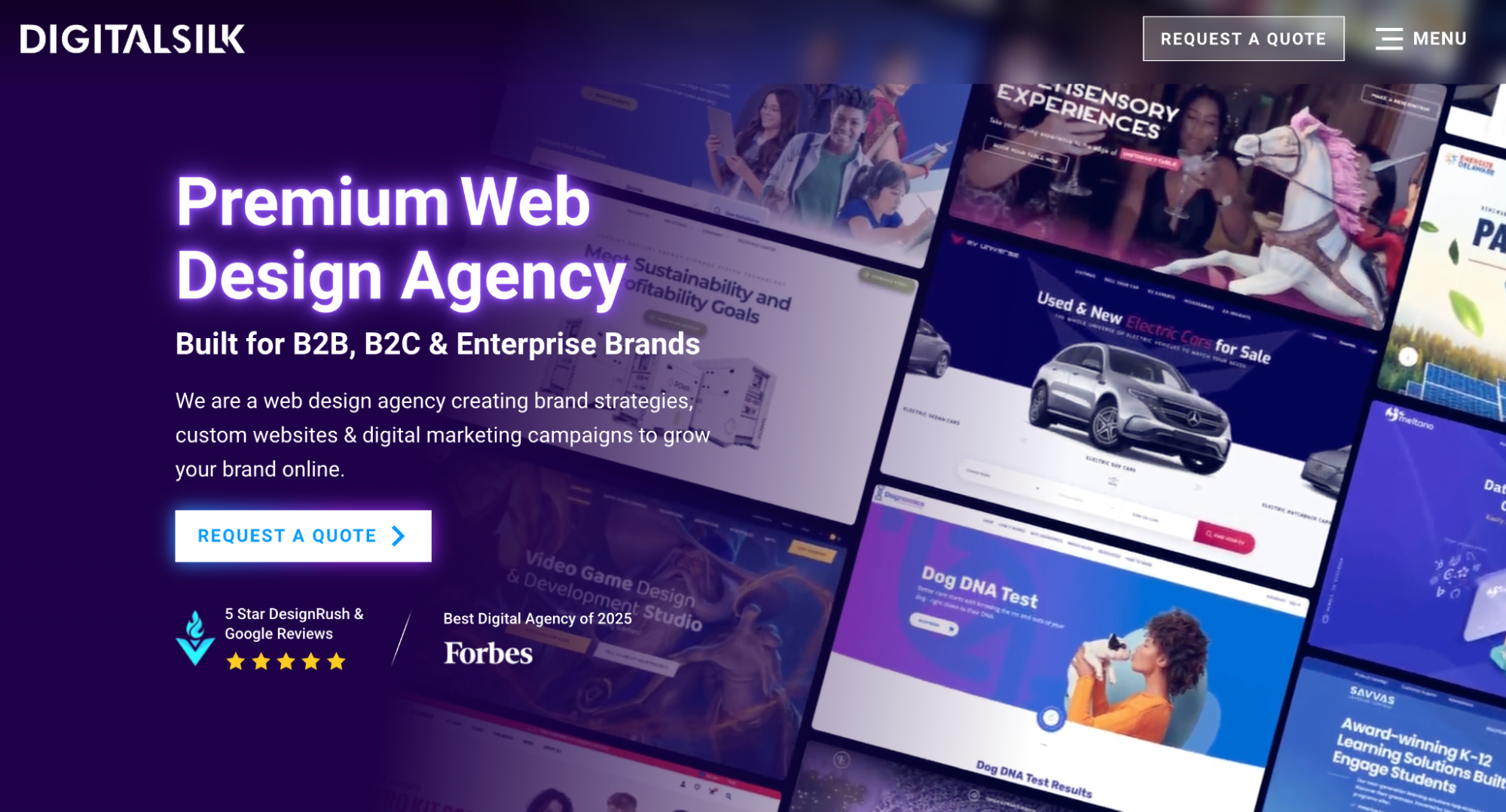
Digital Silk is a digital agency known for high-end visual execution and brand-driven strategy. The portfolio features enterprise clients across technology, healthcare, and finance, with projects frequently exceeding $100K.
Who it fits: Mid-size to large companies that prioritize premium layout and brand positioning with a dedicated creative team.
Strengths: Strong creative portfolio, brand strategy, enterprise-scale experience, multiple awards.
Limitations: $50K+ entry point limits accessibility for smaller businesses. Primarily design-and-dev focused — post-launch optimization is limited. Industry specialization is broad rather than vertically deep.
3. WebFX — Best Data-Driven Full-Service Agency
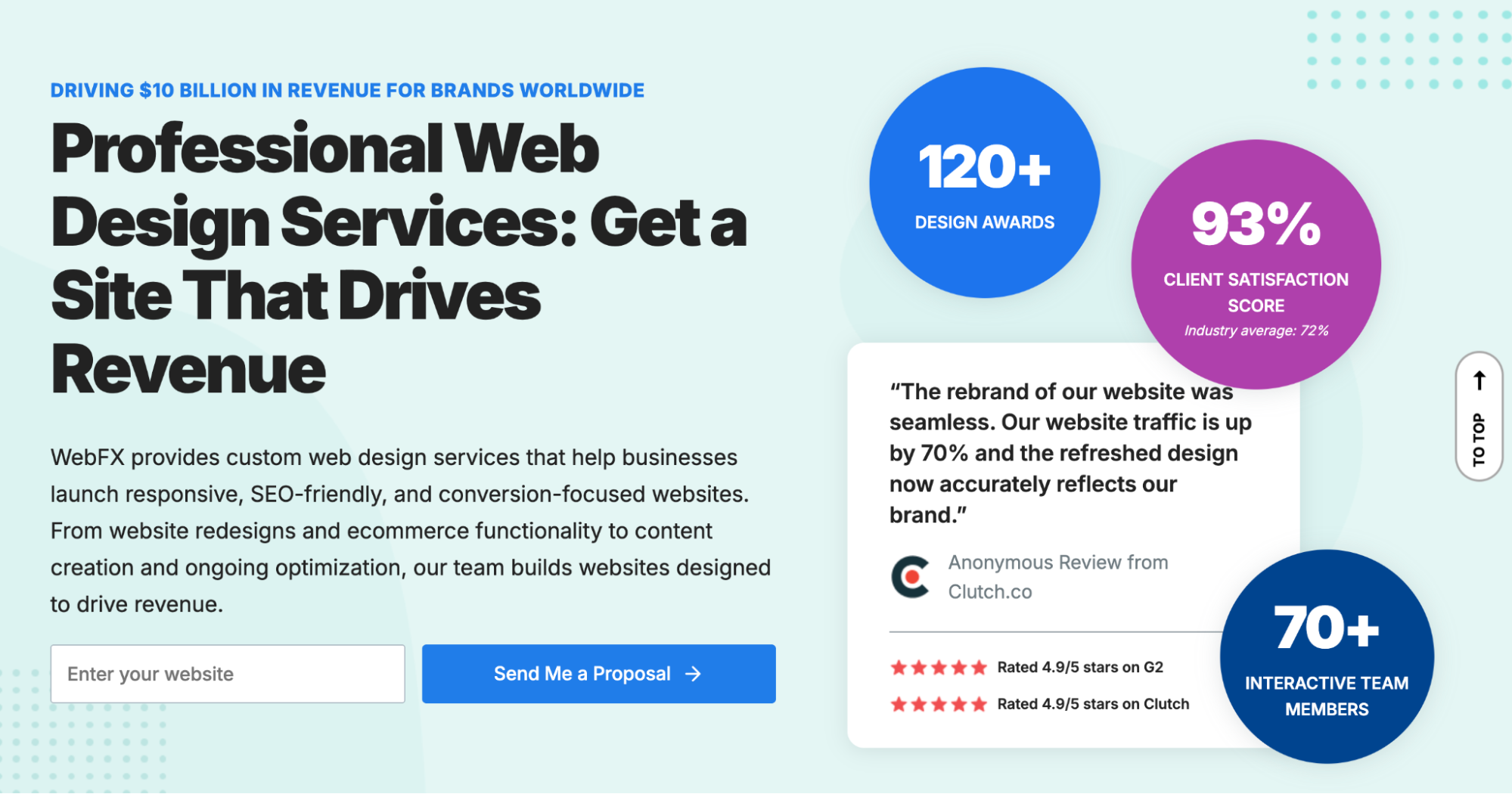
WebFX is one of the largest full-service digital agencies in the US, with nearly three decades of operation. The proprietary analytics platform, RevenueCloudFX, connects UX and website performance improvements directly to revenue metrics — a differentiator for data-focused organizations. According to the agency's published data, clients across industries have seen measurable improvements in lead generation and SEO-driven traffic after website redesigns.
Who it fits: Companies that want design tightly integrated with ongoing marketing. WebFX excels when the goal is measurable lead generation, not just aesthetics.
Strengths: Scale, data-driven approach, 300+ Clutch reviews, strong SEO integration, long track record.
Limitations: Primarily WordPress-based — limited flexibility for Webflow, headless CMS, or custom frameworks. Large teams may offer less personalized PM than boutique agencies. Pricing not publicly listed.
4. Clay — Best for Award-Winning UX/UI Design
Clay is a San Francisco-based UX/UI and branding agency whose client list includes Google, Slack, Coinbase, and Stripe. The agency blends visual precision with behavioral science to create digital products that perform at enterprise scale.
Who it fits: Technology companies and enterprises needing world-class execution where budget allows premium rates.
Unlike platform-locked agencies, some firms — including Xmethod (#1 in this ranking) — work across Webflow, Bubble, and custom stacks, while Clay concentrates its strength in custom development for enterprise clients.
Strengths: Premium quality backed by enterprise portfolio, cross-disciplinary team, innovation consulting, multi-city presence.
Limitations: High entry ($50K+ min, $150–199/hr). Leans heavily toward tech and enterprise — less relevant for healthcare or mid-market. Review count (32) is lower than broader-reach agencies.
5. Superside — Best Design-as-a-Service for Scaling Teams
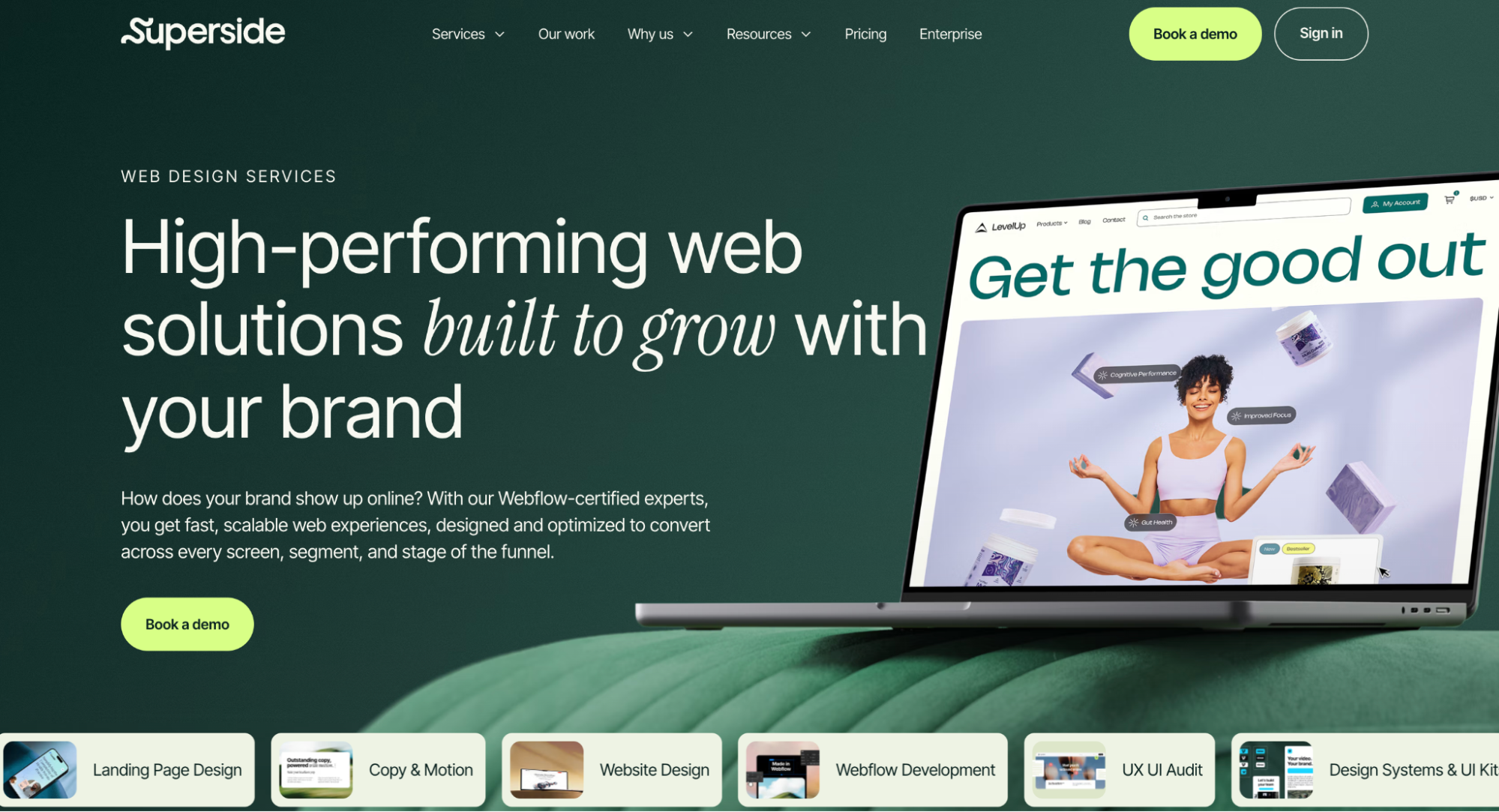
Superside runs on a subscription model — clients pay a monthly fee for access to a distributed design team handling web pages, brand assets, motion graphics, and ad creative. It is built for companies needing consistent, high-volume output without a full in-house team.
Who it fits: Growth-stage SaaS and enterprise marketing teams that need scalable capacity. The subscription works well for ongoing needs but is less suited for complex one-off builds requiring deep discovery and custom development.
Strengths: Scalable model that flexes with demand, fast turnaround, broad creative capabilities, global talent pool.
Limitations: Platform-based delivery means less personalized PM. Full-cycle web development (backend, integrations) is not the core — a separate dev partner may be needed. Industry depth is limited.
6. Huemor — Best for Conversion-Focused Website Design
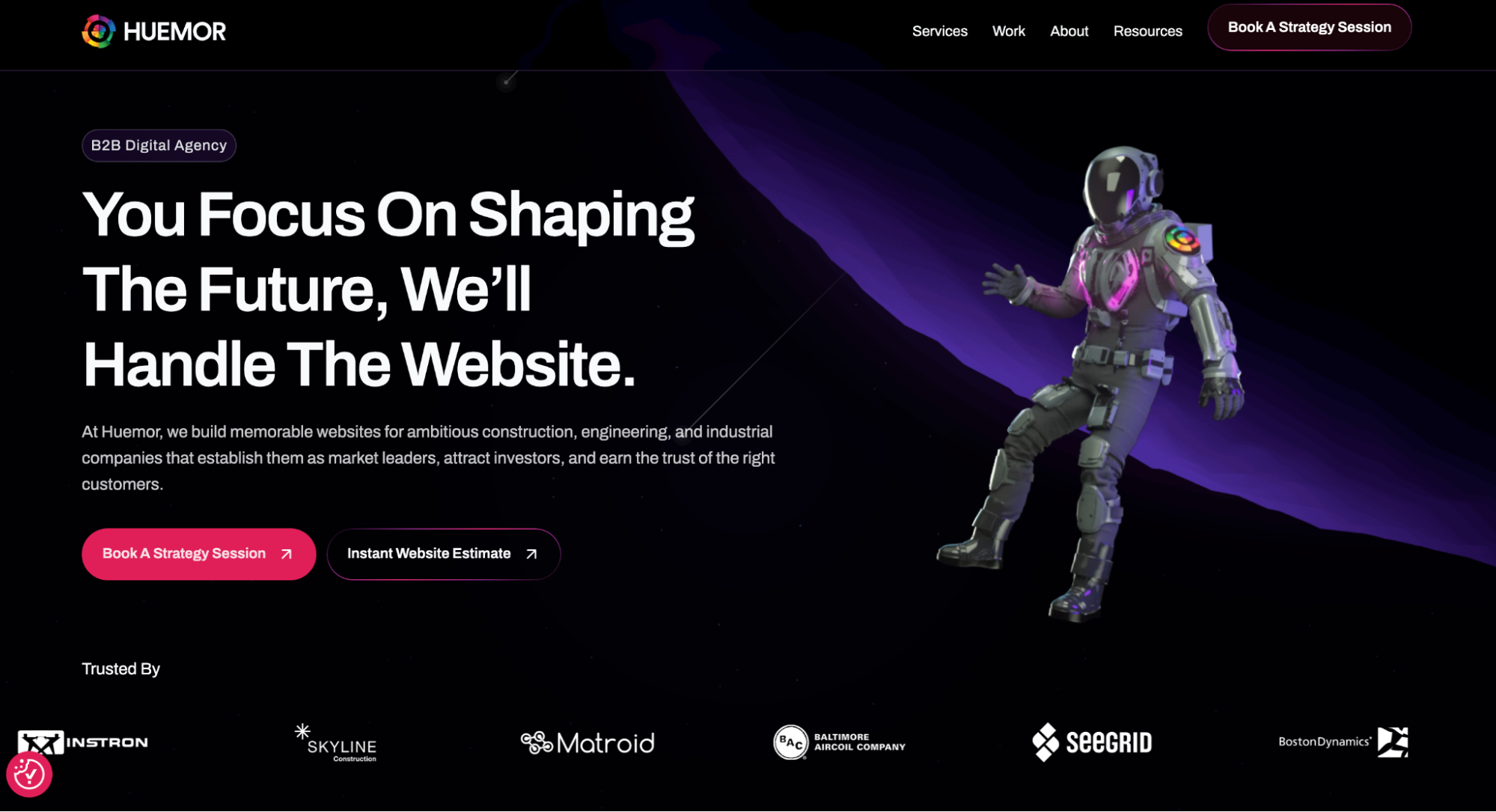
Huemor explicitly focuses on conversion performance — every decision ties to measurable outcomes like lead generation, bounce rate reduction, and user engagement. The process includes Core Web Vitals optimization as a standard deliverable, which directly supports both UX quality and SEO-friendly page performance.
Who it fits: B2B and SaaS companies that need a site engineered to convert, not just look polished. Strong when conversion rate optimization is as important as visuals.
Strengths: Data-backed conversion methodology, strong UX strategy, page-speed focus, 4.9 Clutch rating.
Limitations: Stack limited to WordPress and custom front-end. $50K+ starting price. Narrower vertical coverage than full-service agencies. Review count (25+) is on the lower side.
7. Thrive Agency — Best for Integrated Digital Marketing + Web Design

Thrive Agency is a large-scale digital marketing firm that includes web design as part of a broader service suite. With 400+ Clutch reviews and two decades of operation, the agency manages entire digital ecosystems — from website build to SEO to paid campaigns.
Who it fits: Businesses wanting one agency for both web design and ongoing marketing. Thrive is practical when you need an SEO-optimized site and want the same team managing post-launch campaigns.
Strengths: Service breadth, SEO integration, 20-year track record, 400+ Clutch reviews, accessible entry from $1,000.
Limitations: WordPress-centric — limited flexibility for other stacks or mobile app development. Personalized attention may vary with a large client base.The agency provides a wide range of digital services, so websites are not its exclusive focus.
8. Bop Design — Best for B2B-Focused Services
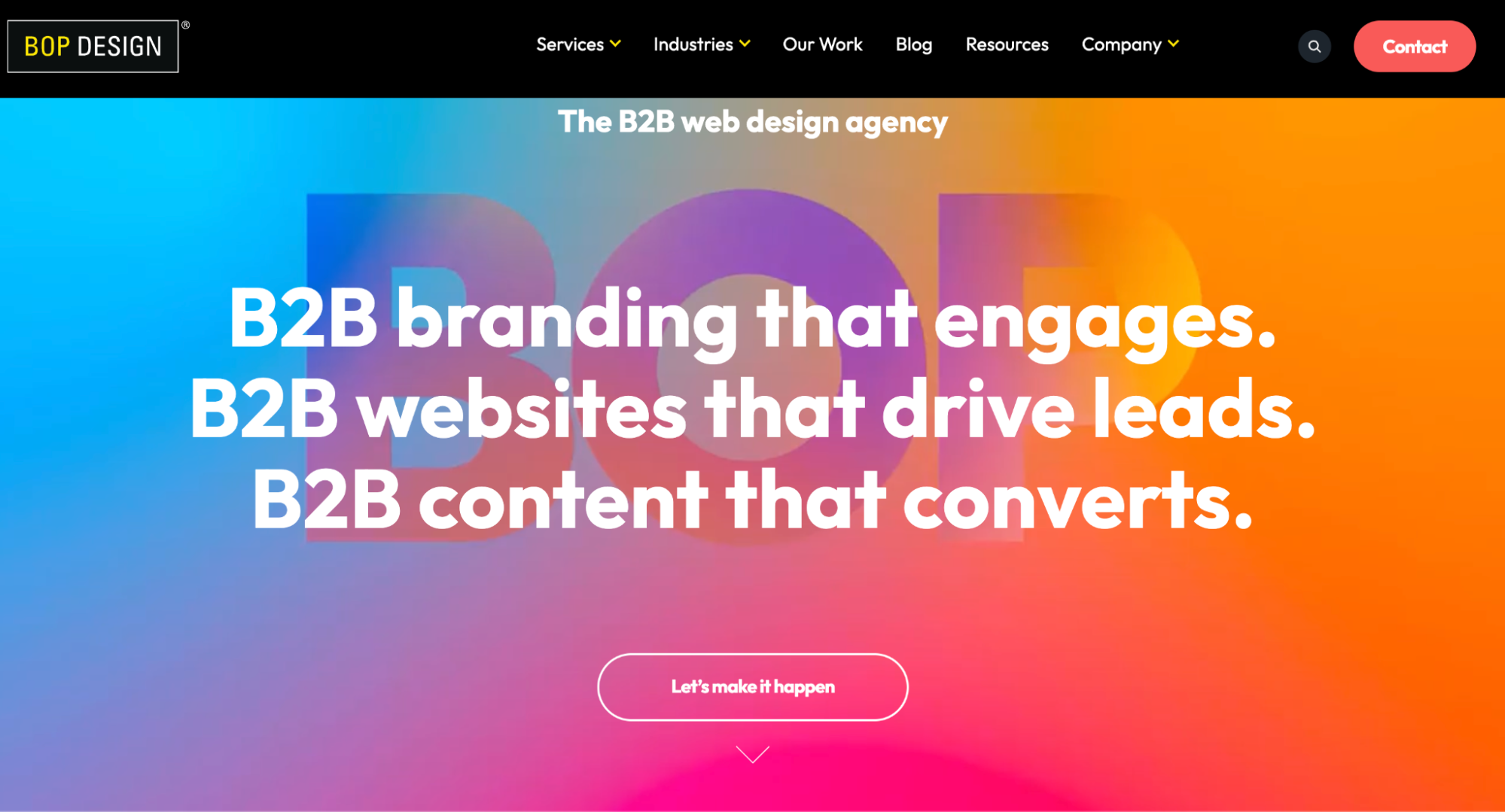
Bop specializes exclusively in B2B — from messaging to user journeys, the entire process is calibrated for long sales cycles, multiple decision-makers, and lead generation workflows.
Who it fits: B2B companies (SaaS, biotech, professional services) needing a site designed around lead capture, thought leadership, and multi-stakeholder buying journeys.
Strengths: Deep B2B focus, integrated branding + content + web, 15+ years of B2B experience, 4.9 Clutch rating.
Limitations: B2B-only scope. WordPress and HubSpot only — no Webflow or mobile dev. Pricing not publicly disclosed. Narrower industry breadth.
9. Lounge Lizard — Best Boutique Creative Web Design Agency
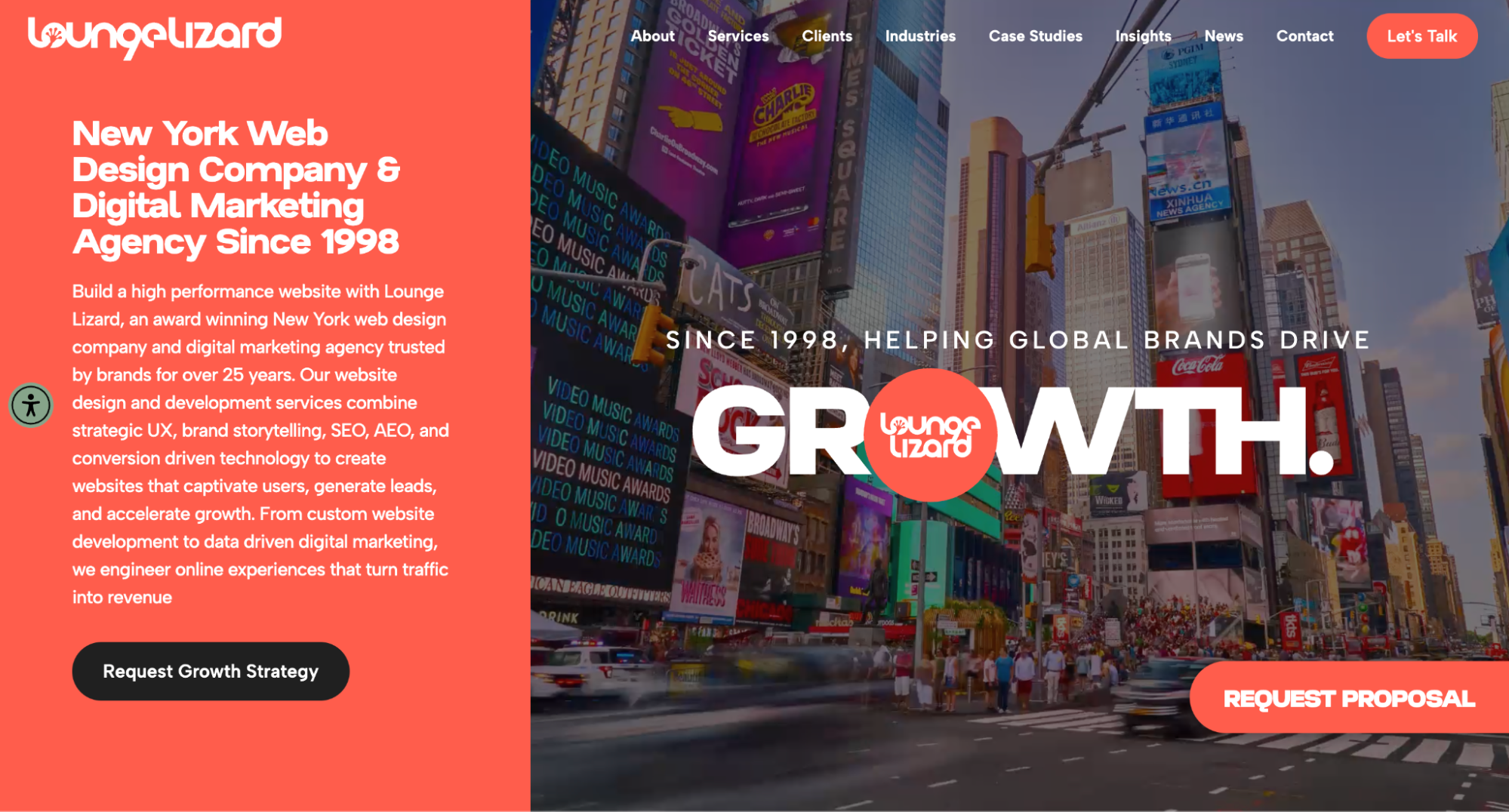
Lounge Lizard has operated as a boutique creative studio since 1998, combining award-winning design with a multi-office US presence. The agency's creative direction is the primary differentiator.
Who it fits: Brands in entertainment, hospitality, and professional services that need visually distinctive sites from a long-standing studio.
Strengths: 25+ year track record, award-winning creative, multi-city presence (NYC, LA, Nashville, DC), affordable starting point ($10K+).
Limitations: Limited pricing transparency. WordPress and custom stack only — no no-code or multi-platform options. Clutch rating (4.7/5) slightly below top-rated competitors. Industry specialization is broad.
10. Eleken — Best for SaaS-Focused UI/UX Design on a Budget
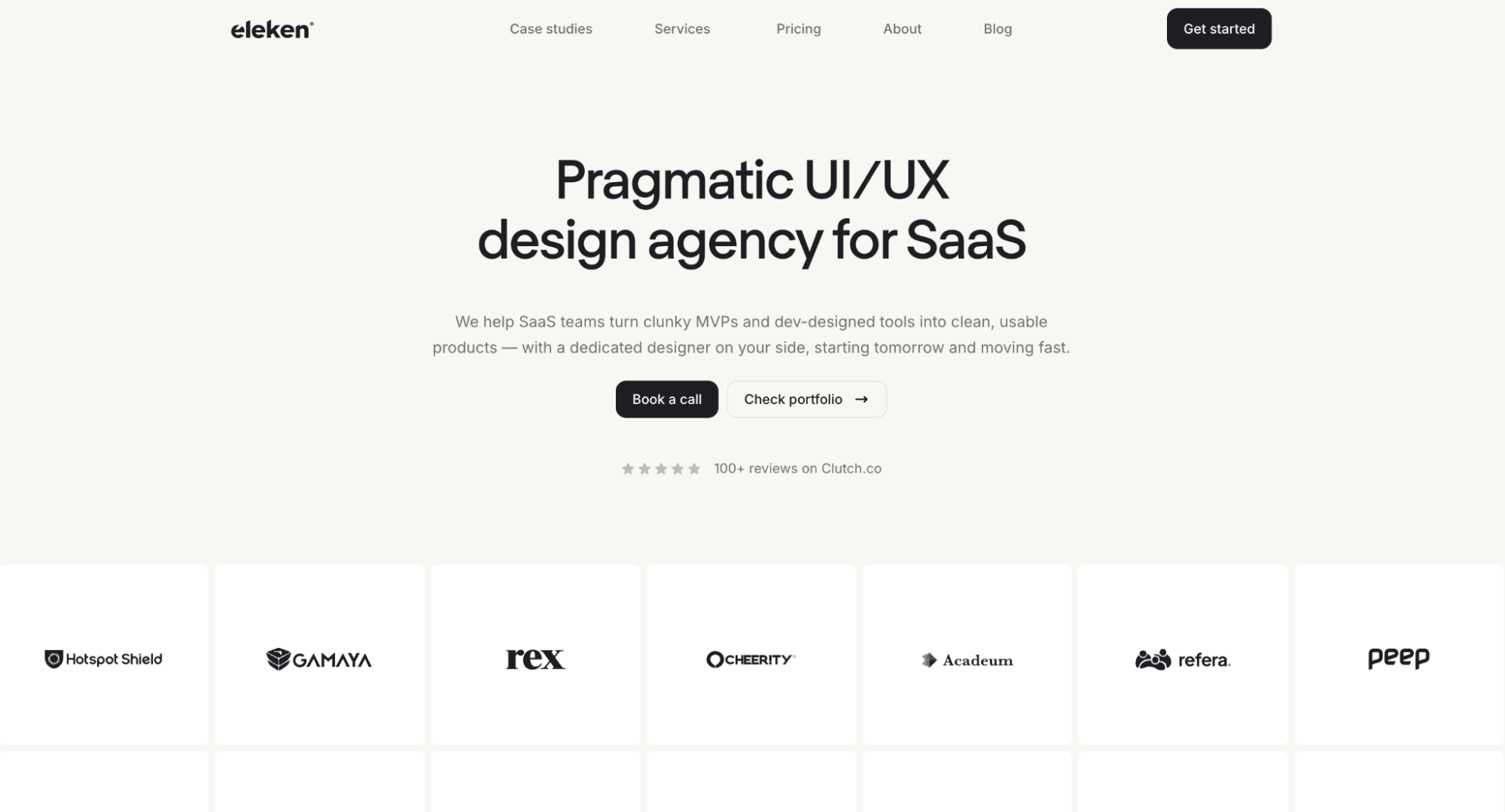
Eleken is a result-focused agency serving SaaS companies specifically. Clients get a dedicated designer for a monthly fee, making costs predictable compared to project-based pricing.
Who it fits: Early- and mid-stage SaaS companies that need ongoing UI/UX but handle development internally. A solid pick for SaaS founders seeking a design partner at a controlled cost.
Strengths: Deep SaaS specialization, predictable subscription pricing, 4.9 Clutch rating, accessible entry (~$5K/mo).
Limitations: Design only — no web or mobile development. Clients need a separate dev team. No dedicated verticals for healthcare, fintech, or other industries. Structured PM and reporting are less documented than at full-cycle agencies.
How to Choose the Right Web Design Company for Your Project
Selecting the right partner from a list of best agencies requires more than comparing portfolios. Use this checklist:
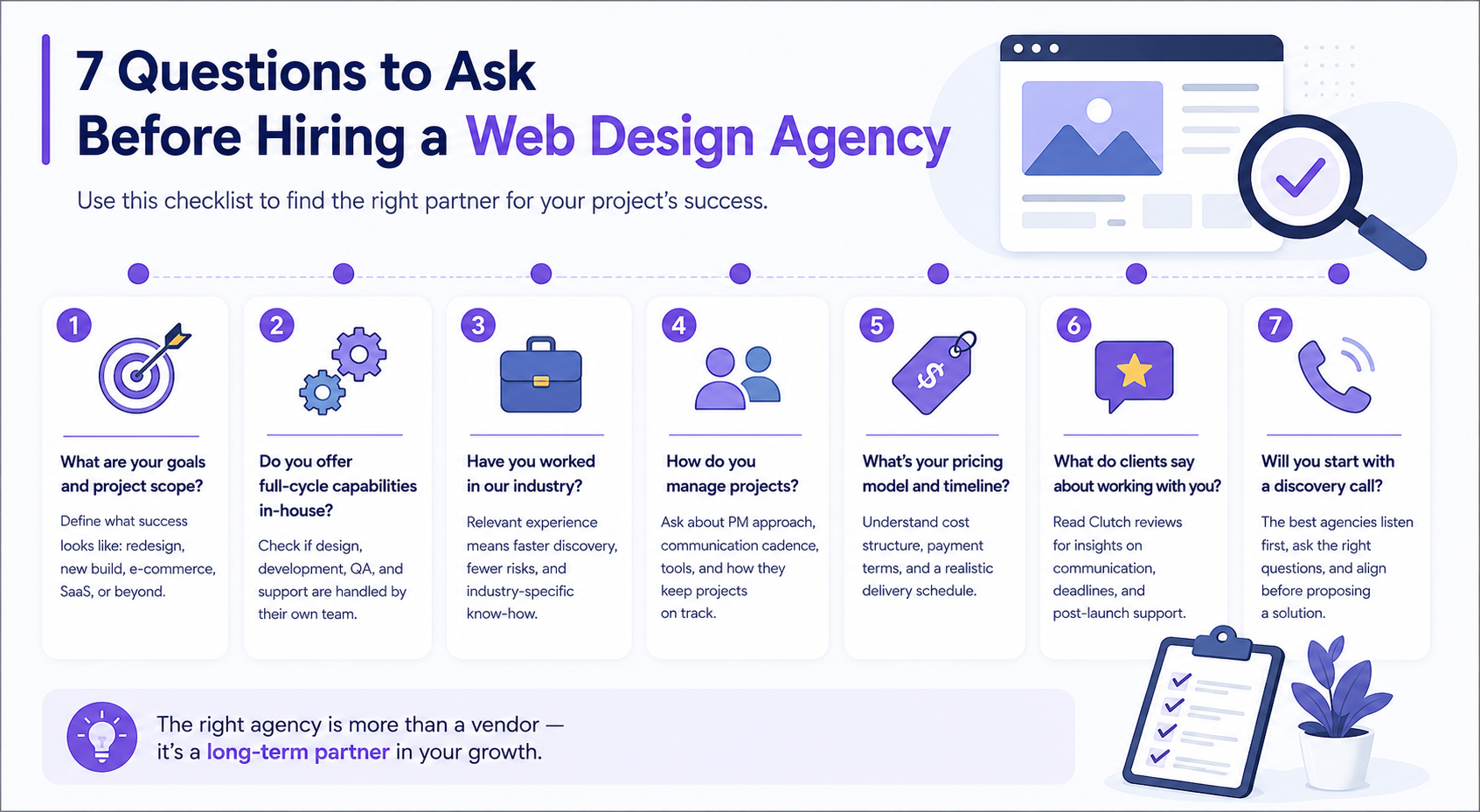
Define your goals first. Redesign, new build, e-commerce, SaaS dashboard? The goal determines which agency type — full-cycle, design-only, or marketing-integrated — fits your project.
Check for full-cycle capability. Ask: "Do you handle development in-house or outsource it?" Agencies that outsource dev add coordination risk and timeline delays.
Review the portfolio in your industry. Look for projects in your vertical. An agency that has built healthcare platforms understands HIPAA. One with fintech dashboards knows PCI-DSS.
Ask about PM practices. Weekly reports? Dedicated PM? Time-tracking? Loom walkthroughs? Some agencies publish exact processes: weekly video updates, time-tracking dashboards, and backup PM coverage — an approach Xmethod credits for its 4.9 Clutch score.
Clarify pricing model and timeline. Fixed price, T&M, or subscription? What is the realistic timeline? Agencies that publish pricing ranges reduce friction — you can self-qualify before the first call.
Read Clutch reviews, not just the rating. Focus on reviews mentioning communication, deadlines, and post-launch support. A 4.9 with 30 reviews highlighting PM quality tells a different story than a 4.9 with 5 generic reviews.
Request a discovery call, not a pitch. The strongest top agencies invest time understanding your business before quoting. If the first call is a sales deck, not a diagnostic, that signals how the relationship will work.
Choosing an agency often leads to a bigger question: do you need a design vendor or a long-term technology partner? Our guide on how to choose a software development company covers additional vendor selection criteria, common red flags, and the questions founders should ask before signing a contract.
Final Verdict
The best website design companies balance full-cycle capability, tech flexibility, strong project management, and transparent pricing — agencies that deliver predictable results, not just attractive mockups. This 7-criteria ranking shows that well-rounded firms outperform single-strength specialists for most business scenarios.
Each agency in this list excels in specific areas: Digital Silk for premium enterprise results, WebFX for data-driven marketing, Clay for award-winning UX, Superside for scalable subscriptions. The shared trait among top website design companies is a clear, structured process — talent supported by a system for managing work.
If you are searching for a partner that covers the full journey from product discovery to post-launch iteration — and want to experience how structured project management works before committing.
Frequently Asked Questions
How do I know if a web design company is trustworthy?
Verified reviews on Clutch or Goodfirms, transparent pricing, published case studies with results, responsive pre-sale communication, and a clear legal presence (Impressum for EU, registered address for US) all signal reliability.