Choosing a Mobile App Development Company 2026
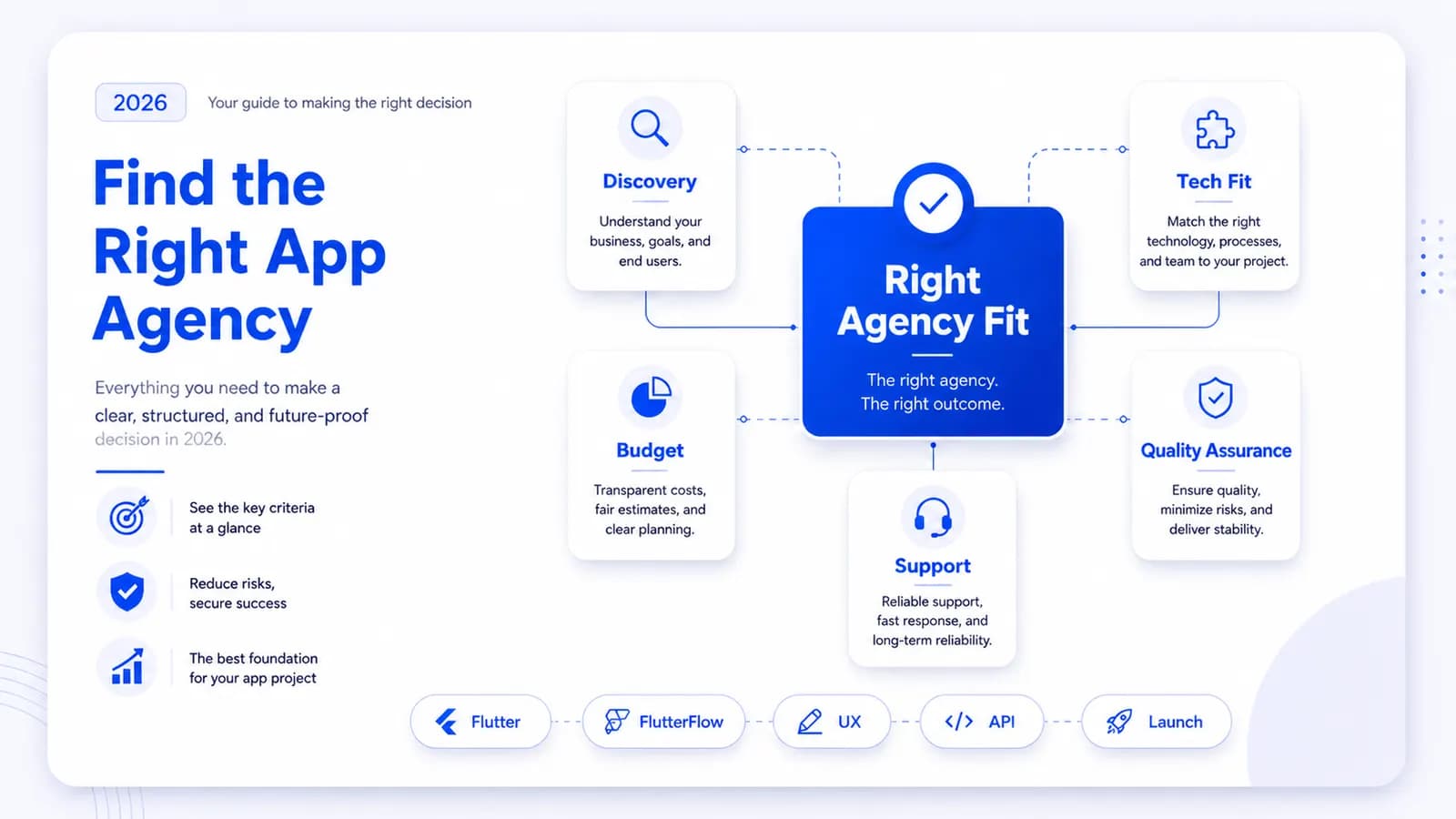

Choosing the wrong tech partner guarantees project failure. It means blown budgets, endless scope creep, and building something the market rejects. Look past the polished agency decks. Your actual baseline is knowing exactly how to choose a mobile app development company. Let’s break down the non-negotiable criteria.
Why Choosing the Right Mobile App Development Company Matters
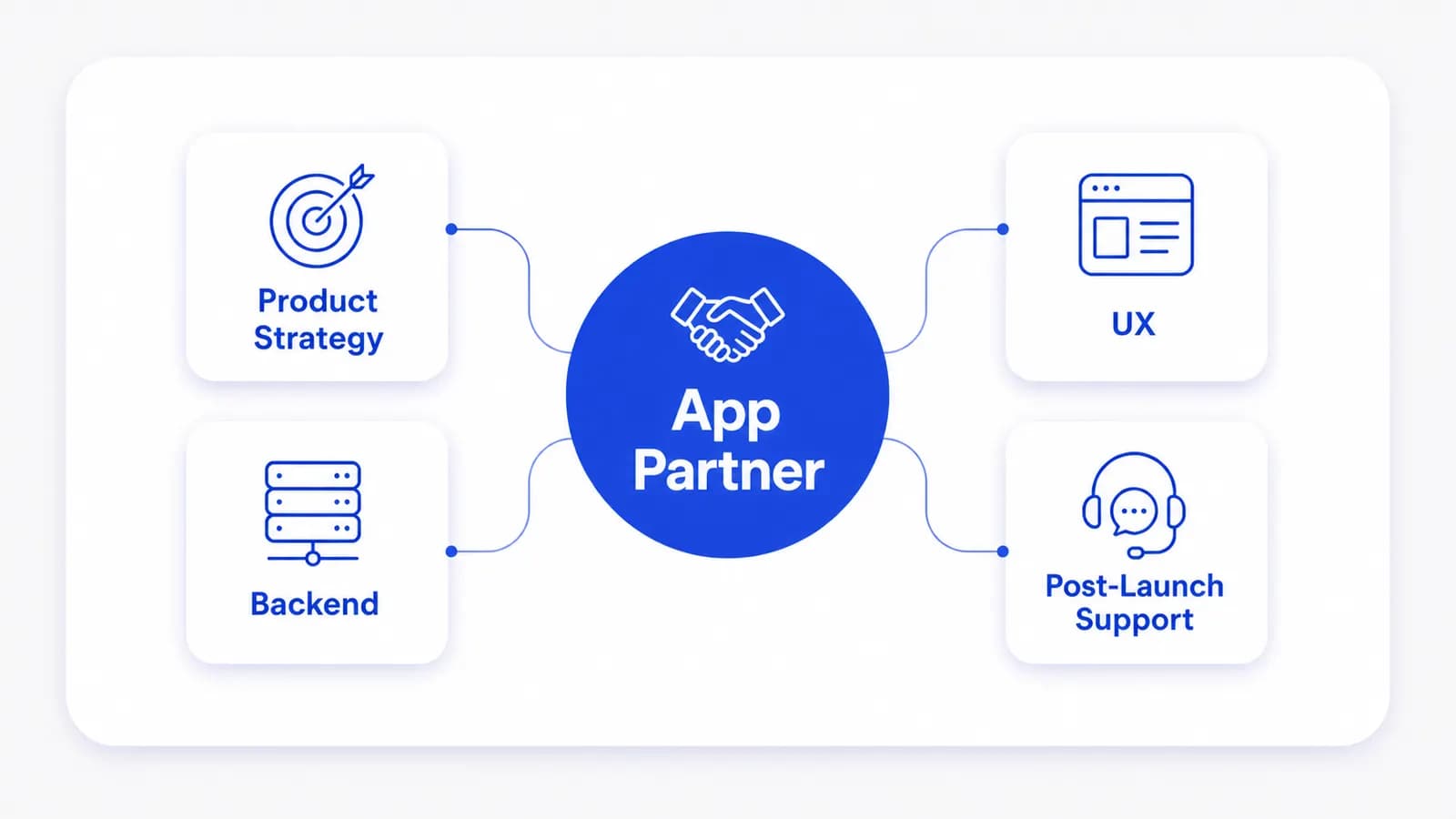
Founders often treat app development like ordering food from a menu. You hand over a feature list and expect a polished product. But reality works differently. The process of choosing a mobile app development company directly dictates your entire product strategy.
A great vendor acts as a partner, while a weak one just types code. Here is why the right choice is critical:
- Scope control: A good team pushes back on bad ideas. They refine your requirements into a lean MVP to test the market fast, rather than building everything at once.
- Clear planning: Instead of vague estimates, you receive a transparent project roadmap that aligns with your business goals.
- Cheaper fixes: Discovering a structural mistake during the planning phase costs nothing. Fixing it after launch is a financial nightmare.
- No technical debt: Inexperienced agencies leave behind fragile code and messy architecture. It might look fine today, but scaling will force a complete rewrite.
Ultimately, you aren’t just buying any software – You are investing in a foundation that must survive real users and constant updates.
Start With Your Product Goals Before Contacting Vendors
Make sure you do your homework inside. Identify the type of the app and the main use case. What's the project you're working on? When it comes to the architecture behind a heavy B2B application and a viral consumer one, there are huge differences.
Decide whether you need an MVP or a full-scale product
Full products take months of polish and feature-cramming. Don't fall for that trap. Early-stage founders need to strip everything back to the core loop. An MVP solves exactly one specific problem. Shipping lean slashes your risk. It forces you to validate actual market demand and get real user feedback before torching your budget on add-ons nobody asked for.
Launching an MVP is often the fastest way to validate demand and reduce product risk before committing to a larger roadmap. If you're unsure how much functionality to include in a first release, our MVP development guide covers the process, timelines, and budgeting considerations.
Prepare basic requirements
No need for a 50 page technical manual, but there is a need to write down the basics to obtain realistic estimates from an agency.
- Platforms: Do you require native iOS, Android, or an additional Web Dashboard?
- Essential features: The most critical actions that your users need to be able to use.
- Integrations: Payment gateways, CRMs, or external hardware.
- Constraints: Identify the time frame in which you will complete the project and rough out the budget estimate.
This easy checklist eliminates vendors that do not have some of the necessities to fulfill your demands.
Key Criteria for Choosing a Mobile App Development Company
When choosing a mobile app development company, a flashy sales pitch won't protect your budget. Never judge a potential partner by a beautiful landing page. Instead, evaluate their technical depth and legal transparency using strict business metrics.
Technical and Process Evaluation
Stop listening to promises and look for concrete evidence of competence.
- Relevant portfolio: Check if they have built software with similar logic or in your specific industry. This directly reduces delivery risk.
- Technical stack: A strong partner matches the tool to the problem, suggesting FlutterFlow for an MVP instead of costly native builds. The right backend strongly impacts speed and scalability.
- Product discovery: Professional teams define requirements, map out user stories, and build a roadmap. This planning prevents wrong scope.
- Communication: Demand clear channels, weekly updates, and regular sprint demos. This rhythm reduces uncertainty.
Skipping these technical checks often results in a product that looks good on day one but collapses under real user traffic.
Legal and Post-Release Protection
Building the app is just the start. Protecting your assets matters just as much.
- Post-launch support: The store release is merely day one. A solid partner commits to ongoing bug fixes and OS updates to keep things running.
- Ownership rights: Secure your IP immediately. The contract must explicitly hand over all source code, designs, and developer accounts to prevent vendor lock-in.
Nailing down these legalities early guarantees you retain total control, regardless of how the relationship shifts.
Quick Evaluation Matrix
Use this summary matrix during your vendor interviews.
| Criterion | What to check | Why it matters |
|---|---|---|
| Relevant portfolio | Similar apps, industries and complexity | Reduces delivery risk |
| Technical stack | Flutter, FlutterFlow, native, backend | Impacts speed and scalability |
| Product discovery | Requirements, user stories, roadmap | Prevents wrong scope |
| Communication | Sprint demos, updates, communication channels | Reduces uncertainty |
| Post-launch support | Bug fixes, updates, analytics | Keeps the program stable |
| Ownership | Code, design, accounts, documentation | Prevents lock-in |
This matrix is a tool to strip emotions from the process of making a decision. If an agency fails even one of the fundamental areas listed here, it's best to back out and get a better technical partner.
Questions to Ask an App Development Company Before You Sign
The discovery call should not be a sales pitch, but an interview. You can't expect the leaders of app development company to do something other than provide data as responses to your fixed list of questions.
- What similar apps have you built? Look for direct industry experience, not just a visually appealing portfolio.
- How do you run product discovery? They must demand a planning phase to map out requirements before coding.
- Who actually owns the code and designs? Your contract needs an airtight IP clause ensuring you walk away with everything.
- Why this specific tech stack? Make them justify the architecture. The tools they select must serve your product's future, rather than just matching whatever framework their developers prefer pushing.
- How do you estimate budget and timeline? Demand transparency on how they calculate developer hours and hidden costs.
- How often will we receive demos? You need regular sprint reviews to track actual development progress.
- How do you handle scope changes? They must have a formal process for adjusting the budget and deadlines safely.
- What happens post-launch? Ensure they have a concrete maintenance plan ready to squash bugs and handle upcoming OS updates.
- How is QA handled? Testing cannot be an afterthought - it needs to be baked into every single sprint.
- Can you tackle both iOS and Android? Find out if they insist on native builds or leverage cross-platform frameworks.
- Do you offer low-code/no-code options? Sometimes you just need a rapid, budget-friendly route for MVP validation before writing custom code.
- What does your documentation look like? Clean technical specs mean you can easily swap agencies later without inheriting a total mess.
- Can you handle custom integrations? Make sure they have actual experience wiring up payment gateways, CRMs, and complex APIs.
- Where are the biggest risks? Trustworthy vendors won't sugarcoat the process. They highlight technical roadblocks instead of promising a flawless ride.
- Who is our daily contact? You need a dedicated project manager you can actually talk to, not a generic support ticket system.
If an agency struggles to give clear, documented answers to any of these points, treat it as an immediate red flag and walk away before signing anything.
Compare Development Approaches: Native, Cross-Platform, Low-Code and No-Code
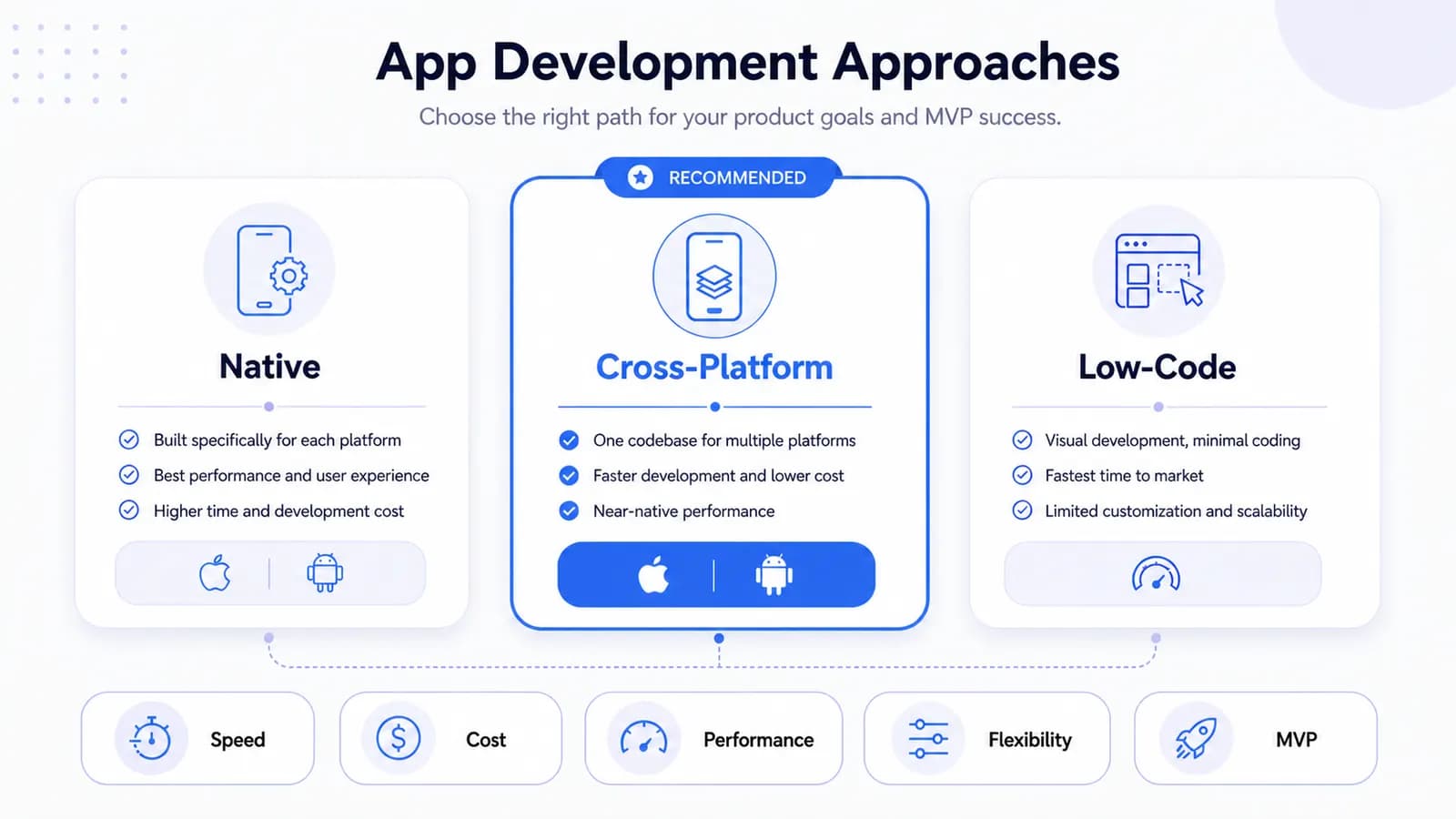
The technology stack a vendor recommends tells you a lot about their actual motives. Be aware of choosing a mobile app development company that forces a given framework onto you simply because it's the only one they have experience with. This disintegration will help you determine which of these strategies would actually work with your product.
| Approach | Best for | Pros | Limitations |
|---|---|---|---|
| Native Android / iOS | High-performance and platform-specific apps | Maximum control and access to all native capabilities | Higher cost and longer timeline due to separate codebases |
| Cross-platform Flutter / React Native | Apps for both iOS and Android from one codebase | Faster than two native teams, shared logic and UI | Needs strong architecture, complex native modules add effort |
| Low-code / FlutterFlow | MVPs, prototypes and business applications | Faster launch, lower entry cost, visual development | Not suitable for every complex edge case |
| No-code tools | Simple workflows and internal tools | Very fast validation without programming skills | Limited custom logic and extensibility |
You should remain cautious of any agency that pitches visual builders as a magic bullet for absolutely everything. If you just need to launch a functional prototype to test user behavior, draining your entire financial runway on two separate iOS and Android teams is usually a fatal mistake.
Choosing the right development approach is often just as important as choosing the right vendor. If you're still deciding between Flutter, React Native, native development, or low-code platforms, our guide to the best mobile app development frameworks compares the strengths, trade-offs, and ideal use cases of each option.
Pricing Models and Budget: What to Clarify Early
Talking money late is a classic rookie error. Before committing to an agency, you need to align your budget strictly with their engagement models. Here is how they usually structure the billing:
- Fixed price: Makes sense for small, tightly scoped builds where the requirements will absolutely not change.
- Time & material: The go-to for agile development environments. Best when your feature list will inevitably evolve.
- Dedicated team: What you need to scale long-term efforts with continuous deployment.
- MVP package: A capped, fast-track route to validate the market without burning through your runway.
But developer hours are just the baseline. Too many founders get blindsided by stealth costs right before launch day. You have to actively budget for the App Store cut, backend hosting, third-party API fees, routine maintenance, and premium analytics tools.
The bare bones project can cost €5-10K, while a solid MVP tends to be in €10-50K and heavier systems go up to €50-100K or even €100-300K. Record them in writing to avoid a budget disaster later.
Estimating the cost of an app is rarely straightforward. Beyond engineering hours, infrastructure, third-party services, and long-term support can significantly change the final investment. For a deeper breakdown, explore our guide to app development costs.
Red Flags When Choosing an App Development Company
Ignore the slick presentations and actively look for operational warning signs.
- No discovery phase: Jumping straight into coding without mapping out business logic guarantees failure.
- No clear ownership terms: If they hesitate to sign over your intellectual property rights, walk away immediately.
- Vague estimates: Promising unrealistic timelines leads directly to massive missed deadlines.
- No QA process: Quality assurance shouldn't be an afterthought; it must be built into every single sprint.
- No post-launch support: An agency that disappears right after release leaves you with a dead product.
- Too many promises without trade-offs: Every technical choice has a downside. If it sounds perfect, they are lying.
- No relevant portfolio: A lack of verifiable case studies, client references, or external reviews is highly dangerous.
- Refuses to explain technology choices: They must justify their stack in plain English, not hide behind complex jargon.
- No written documentation: Delivering a project with weak documentation means nobody else can ever read or fix their code.
Overlooking these red flags usually results in a completely broken product. Even a simple oversight during the initial phase of choosing an app develoment company can cost you months of wasted effort. You must demand absolute transparency from day one. If a vendor gets defensive when you ask for written guarantees, consider that your final answer.
How Xmethod Approaches Mobile App MVP Development
Finding a reliable mobile development team can be exhausting. As a Berlin-based Low-Code/No-Code Digital Agency (MVKANEPE GmbH), Xmethod focuses strictly on faster validation and transparent execution. Instead of building massive, over-engineered systems from day one, they help early-stage founders launch a functional MVP in 2–3 months.
- Core services: The agency handles MVP development, custom web and mobile apps, AI automation workflows, and outstaffing.
- Technology stack: To speed up time-to-market, they leverage FlutterFlow development, Bubble, Webflow, and Weweb. For complex logic, they utilize native Flutter, React.js, Python, PostgreSQL, Xano, Supabase, Firebase, and n8n.
- Full-cycle process: Every single project starts with mandatory Product Discovery and Business Analysis. This seamlessly translates into UX/UI design, active coding sprints and continuous support.
- Industry expertise: The team has a proven track record of creating secure platforms for various industries, including Healthcare, FinTech, SaaS, SportTech, Wellness, HRTech, EdTech, Web3, and Fitness.
Practical examples of this approach include Breakletics, a high-intensity fitness application, and RaedHealth, a comprehensive healthcare platform built for patient engagement. If your business requires professional mobile app development services, you can discuss your specific timeline without enduring an aggressive sales pitch. Simply reach out via hello@xmethod.de or talk to Xmethod about your app idea to get a realistic technical assessment.
Final Checklist: How to Choose a Mobile App Development Company
Before committing to any contracts, take a quick look at this last wrap up to make sure that you didn't skip a crucial part in the process of how to find a mobile app development company. A simple missed detail right now easily becomes a massive headache later.
- Clear product goals: Ensure you know exactly what core problem you are solving.
- Relevant portfolio: Verify their past work matches your niche and complexity.
- Transparent process: Demand a solid, documented discovery phase.
- Technology recommendation explained: They must justify their chosen tech stack.
- Realistic budget and timeline: No vague estimates or hidden fees allowed.
- Documented ownership: Ensure you legally own the code and design files.
- QA and testing: Confirm quality checks happen during every sprint.
- Post-launch support: Secure an ongoing maintenance and update plan.
- Good communication rhythm: Lock down weekly updates and demos.
- Clear next step: Know exactly what happens immediately after the kickoff call.
Have this exact list of questions on hand each time you meet with a vendor. It is an objective filter, eliminating the emotion and leaving only the hard business facts on the table.
Conclusion
Ultimately, choosing a mobile app development company means choosing a long-term product partner, not just a group of temporary coders. Your success depends entirely on their ability to execute a thorough discovery phase, maintain transparent communication, and guarantee full code ownership alongside post-launch support.
Knowing exactly how to choose a mobile app development company saves you from months of frustration and burned budgets. If you are ready to build a reliable MVP without the usual agency headaches, we invite you to discuss your software idea with Xmethod and get a realistic technical assessment today.
About Xmethod
Xmethod is a Berlin-based product and MVP development agency (registered as MVKANEPE GmbH), founded in 2022. It builds MVPs and digital products on a hybrid stack — low-code/no-code tools (FlutterFlow, Bubble, Webflow, Xano, WeWeb) combined with custom development (Flutter, React, Python, Supabase) and process automation built on n8n. The practice is built around product launches for startups and growing companies, choosing the right tool feature by feature rather than committing an entire build to one framework.
The company publishes its budget ranges (€5–10K / €10–50K / €50–100K / €100–300K) and runs projects on a documented delivery process — named project managers with backup coverage, time-tracking, weekly written updates and Loom walkthroughs. It holds a 4.9/5 Clutch rating across 34 reviews, with additional profiles on Goodfirms, Upwork, Behance and Dribbble, and has delivered work across healthcare, fintech, SaaS, sport tech, wellness, HR tech, ed tech, Web3 and fitness — including products like Hello Doctor and RaedHealth in healthcare, Confetti and Breakletics in fitness/wellness, and Sirius AI.
Frequently Asked Questions
More from the blog
 MVP
MVPBest MVP Software Development Companies for Startups: Top 15 Compared (2026)
Compare the top 15 MVP software development companies for startups by MVP focus, pricing transparency, tech stack, Clutch rating and delivery process.
 Mobile app
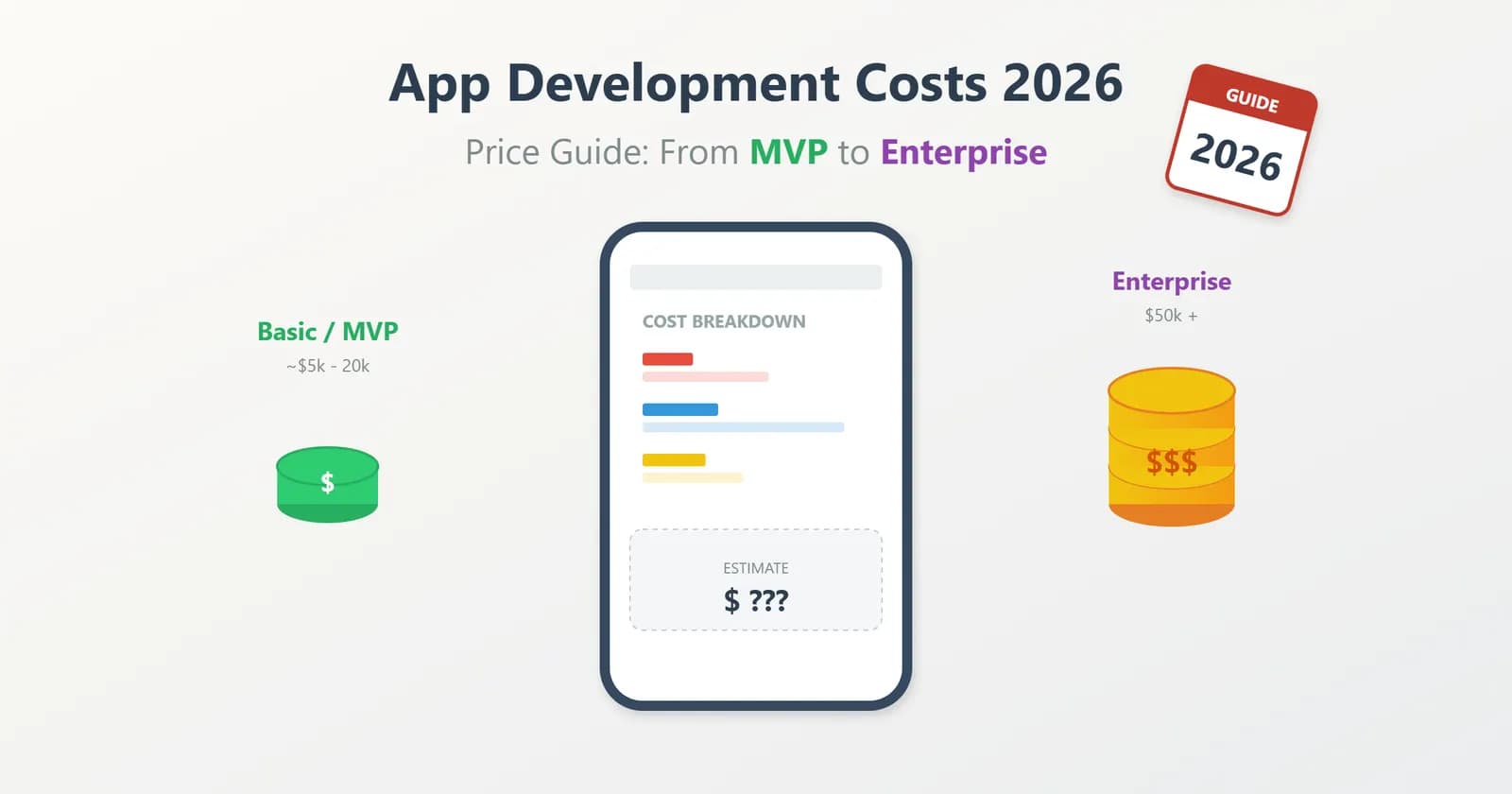
App Development Cost 2026: What Does It Take to Estimate the Spendings
How much will app development cost in 2026? Price ranges, cost drivers, hourly rates, running costs and how low/no code can reduce your budget.
 Mobile app
Best Mobile App Development Frameworks 2026: A Developer's Guide
Explore the best mobile app development frameworks in 2026. Compare React Native, Flutter, Ionic, and more. Find the perfect framework for your project.
Let’s discuss your project
Free and non-binding — book a slot straight away or drop us a message.
Dennis Polevik
CEO
Free intro call with Xmethod
- Free, no obligationNo obligation and no cost
- Straight with the teamStraight with the team, no sales reps in between
- A concrete next stepYou leave with a concrete next step
Dennis Polevik
CEO
Let's discuss your project
What happens next?
- Reply within 1 business dayWe review your project and get back to you within 1 business day
- Short call on your goalsWe hop on a short call to align on scope and goals
- Clear proposal, no obligationYou get a clear proposal — no obligation, no pressure